
Robotics
AgiBot launches WITA-Omni, an on-robot interaction model it says responds in as little as 400 milliseconds
AgiBot said on November 16 that WITA-Omni is the industry's first end-to-end, all-modality interaction model for embodied robots, taking in touch and body-state data and outputting movements and facial expressions.
- Who
- AgiBot
- What
- Released the WITA-Omni embodied interaction model
- When
- 2026-11-16
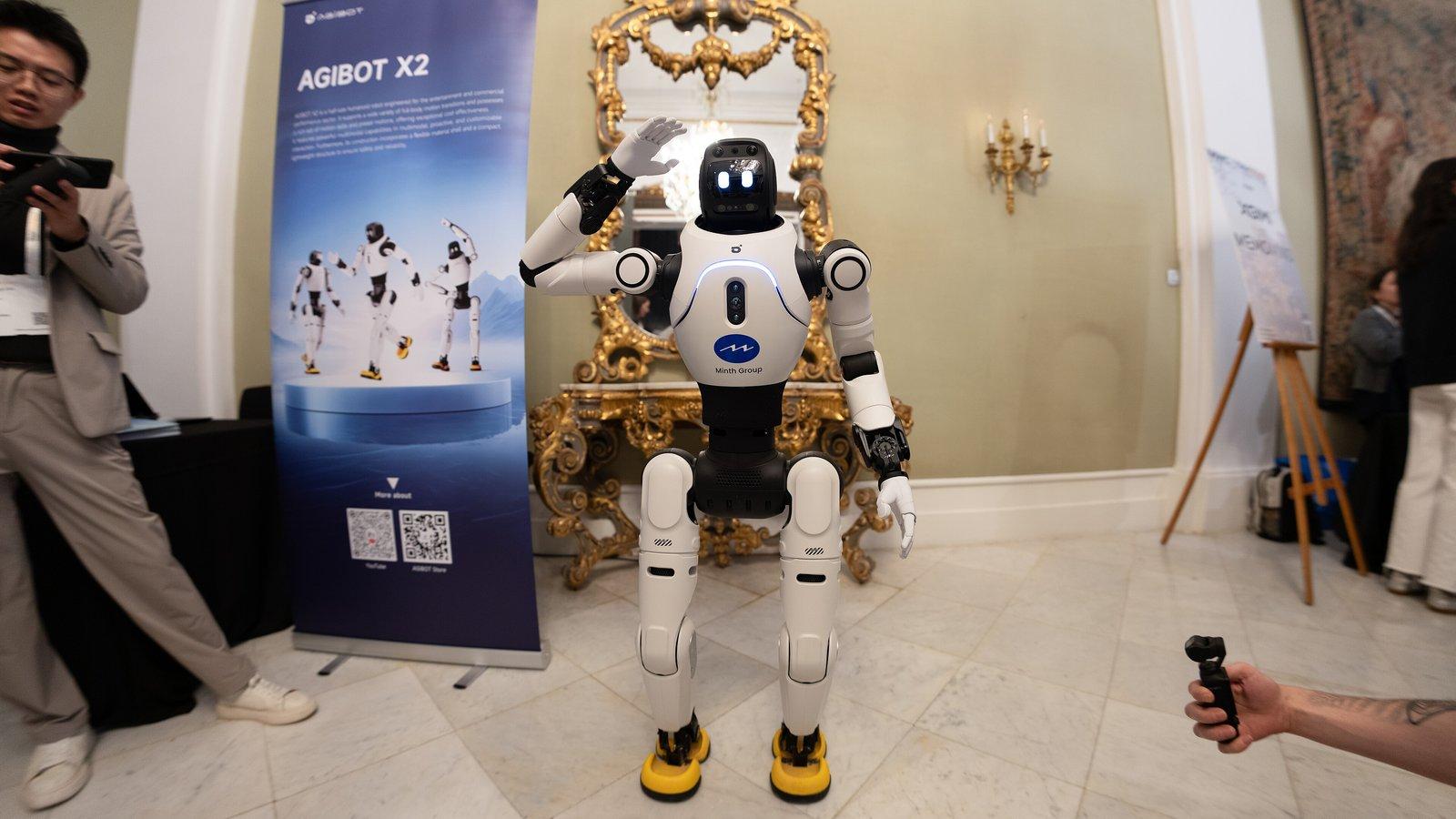
Image: Jorge Jaramillo / Wikimedia Commons / CC BY 4.0
Editor:管理员|Signed:2026-11-24 08:52
Chinese robot maker AgiBot released WITA-Omni on November 16, 2026, according to a news post on its website. AgiBot calls it the industry's first end-to-end, all-modality interaction model for embodied robots. Trained on data from the robots' own sensors, it handles audio and video and also takes touch and body-state inputs, and it produces robot movements and facial expressions as well as speech. The "first" claim is AgiBot's own.
AgiBot says the model uses a streaming, full-duplex design, so the robot can listen, think, reply and move at the same time. Response time is about 400 milliseconds at best and about 600 milliseconds on average, which AgiBot says is nearly three times faster than the industry average. It supports more than a hundred languages and dialects without switching modes and needs no wake word, deciding whether to answer from cues such as which way a speaker is facing, voiceprints, lip movement and meaning. The model runs on board AgiBot's Expedition A3-Ultra robot, which the company says helps with privacy and offline use.
AgiBot says WITA-Omni tops four leaderboards: DailyOmni, ActivityNet-TimeLens, MMAU and EmbSpatialBench. It says robots running the model already give talks and guided tours at some entertainment venues. The post gives no leaderboard scores, does not explain how the industry average was measured, and does not name the venues.
Corrections
If a fact is wrong, the correction and date go at the top. Principles
 Six AgiBot G2 robots work a convenience store for 24 hours on a livestream, completing 1,730 tasks
 Huawei Cloud open-sources CloudRobo-WM1.2, an embodied world model it says tops RoboTwin 2.0 and LiberoPro 2.0
 China's industry ministry approves 274 standards, including five for humanoid robots that take effect immediately
