
Research
HKUST bionic eye in Nature Materials packs 367,500 pixels onto a hemispherical retina and cuts motion-sensing data by over 99.95%
The Hong Kong University of Science and Technology said on November 13 that Professor Fan Zhiyong's team has built a high-resolution bionic eye combining full-color imaging, an aberration-corrected field of view wider than 160 degrees and event-driven motion sensing on a hemispherical artificial retina.
- Who
- HKUST, Fan Zhiyong's team
- What
- Developed a high-resolution hemispherical bionic eye
- When
- 2026-11-13
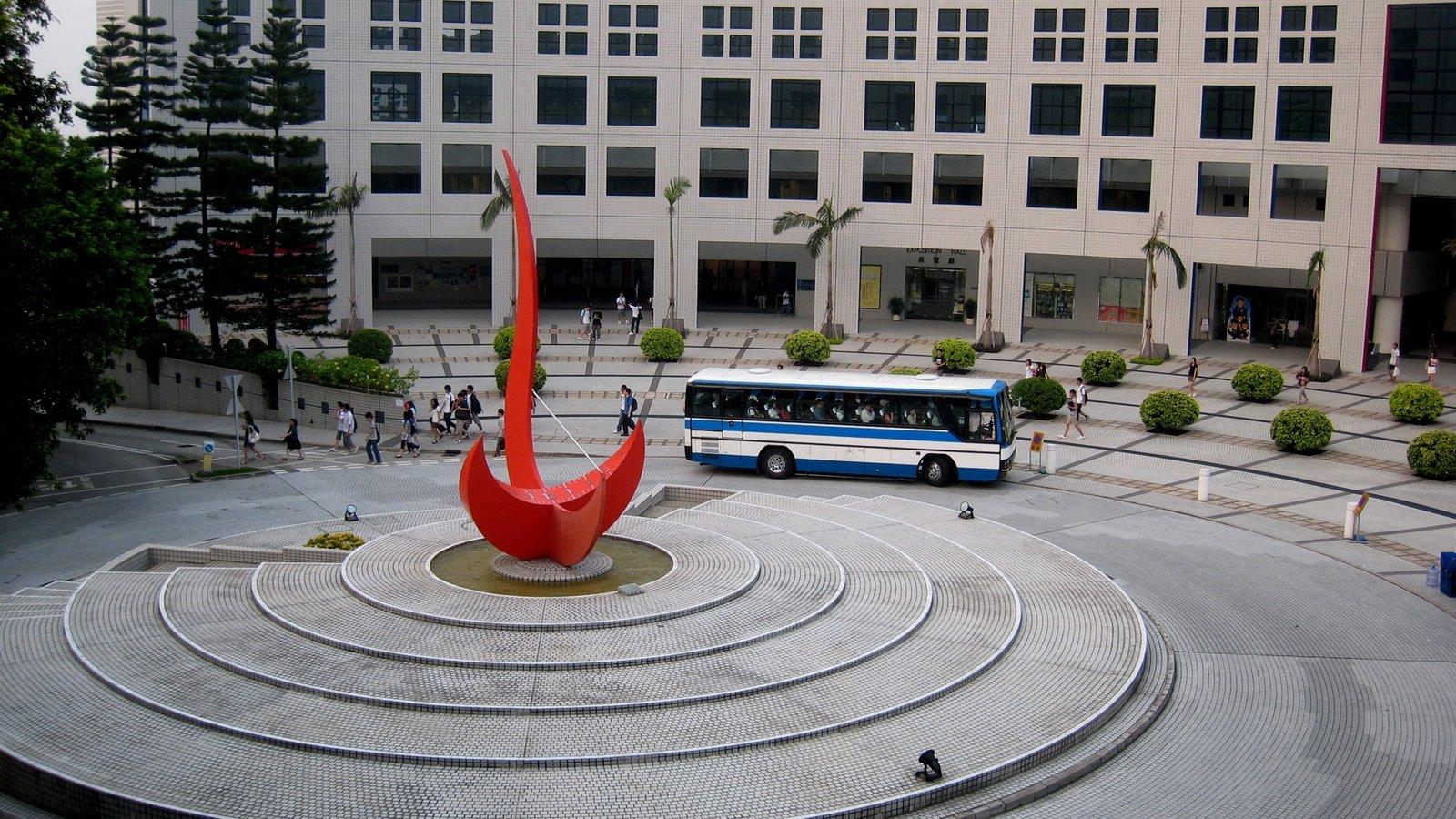
Image: cogdogblog / Wikimedia Commons / CC0
Editor:管理员|Signed:2026-11-24 08:52
Fan Zhiyong, chair professor of electronic and computer engineering at HKUST, and his team used a new 3D laser processing method to build a dense photosensor array on a hemispherical surface, the university said on November 13, 2026. The artificial retina reaches 1,905 pixels per inch and 367,500 pixels in total, up from 100 pixels in the team's 2020 Nature paper. The work, "An aberration-corrected bionic eye for full-color vision and event-driven motion detection", was published in Nature Materials.
Modeled on the three-color retina of carp-family fish, the device stacks layers sensitive to blue, green and red light, with a spectral response of 300 to 800 nanometers, and corrects aberrations across a field of view wider than 160 degrees. It can also sense changes in a scene directly instead of sending full frames: under the study's test conditions, data transmission fell by more than 99.95% compared with frame-based imaging while motion recognition accuracy reached 98.6%. Fan said the team hopes to build a next-generation eye with more than a million pixels for robotics and autonomous driving.
Corrections
If a fact is wrong, the correction and date go at the top. Principles
 Science: Peking University team cools atoms below 10 picokelvin aboard China's space station
 Tsinghua team uses LLMs and diffusion models to screen nearly 70,000 structures for low-lithium solid electrolytes
 Science: Zhejiang University team braces perovskite grain boundaries with nanodiamonds, reaching 27.04% certified efficiency
