
Research
Nature: AI-native autonomous lab AutoDNA orchestrates more than 20 kinds of instruments to run nucleic-acid experiments
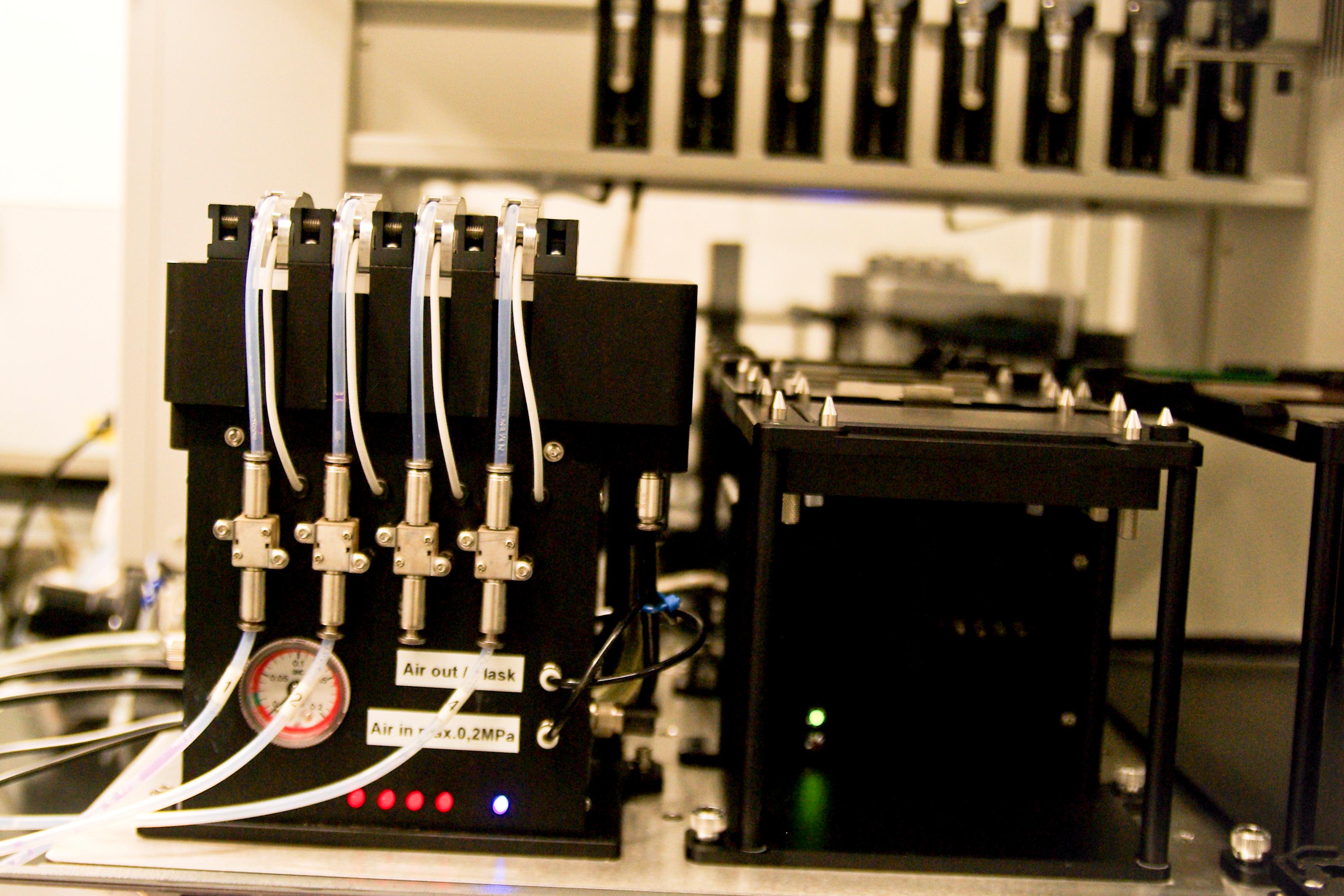
According to a Nature paper published on November 4, AutoDNA completed more than 11,000 steps on its own, with people only handling hardware upkeep such as restocking reagents and consumables.
- Who
- Mingyu Wu, Zhaoguo Wang, Chunhai Fan, Haibo Chen et al.
- What
- Published the AutoDNA autonomous-lab paper
- When
- 2026-11-04 (Nature)
Editor:管理员|Signed:2026-11-24 08:52
Nature published 'An AI-native experimental laboratory for autonomous biomolecular operations' on November 4, 2026, describing AutoDNA, an AI-native autonomous lab for biomolecular engineering. The authors include Mingyu Wu, Zhaoguo Wang, Chunhai Fan and Haibo Chen.
According to the abstract, AutoDNA co-designs models, experiments and instruments to orchestrate more than 20 types of instruments across more than 11,000 steps on its own, carrying out core operations such as nucleic-acid synthesis, transcription, amplification and sequencing. Human involvement is limited to hardware maintenance such as replenishing reagents and consumables.
In four representative applications, AutoDNA matched expert-optimized yields in enzymatic DNA synthesis, ran experimental workflows 3.2 times faster in parallel, completed an end-to-end DNA data-storage run that recovered the original data accurately, and identified and validated a clinically detected KRAS G13D mutation.
Corrections
If a fact is wrong, the correction and date go at the top. Principles
 Science: Peking University team cools atoms below 10 picokelvin aboard China's space station
 Tsinghua team uses LLMs and diffusion models to screen nearly 70,000 structures for low-lithium solid electrolytes
 Science: Zhejiang University team braces perovskite grain boundaries with nanodiamonds, reaching 27.04% certified efficiency
