
Research
Science: Princeton models learn thousands of words from one child's home audio, but only with nightly 'replay'
Princeton researchers reported in Science on November 5 that language-learning models fed only the everyday speech heard by individual children learned English sounds and thousands of words, once they were allowed to replay recent input each simulated night.
- Who
- Princeton University (Uri Hasson, Hadas Raviv and colleagues)
- What
- Modeled language learning from individual children's home recordings
- When
- Published in Science 2026-11-05
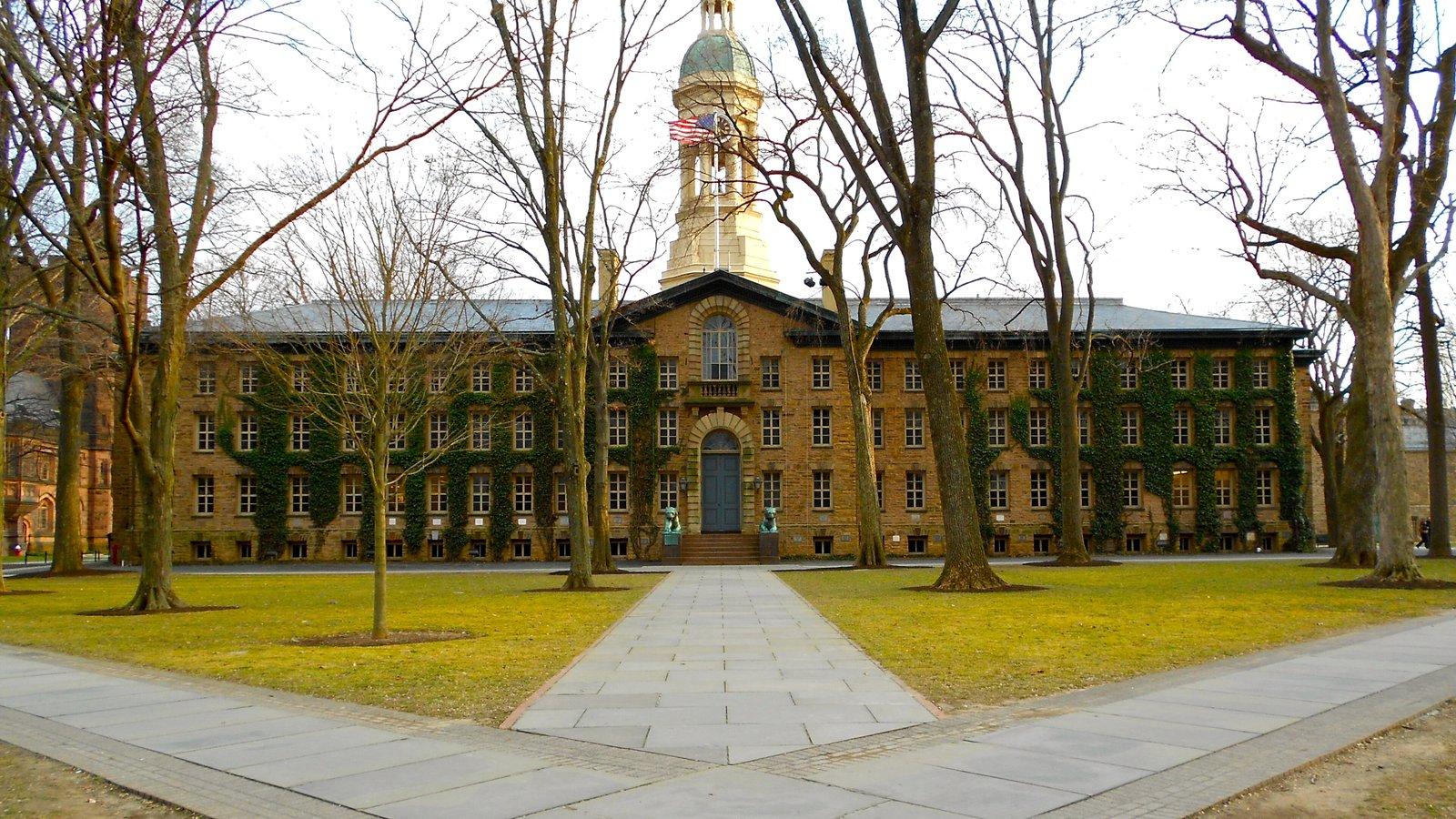
Image: Smallbones / Wikimedia Commons / CC0
Editor:管理员|Signed:2026-11-24 08:52
A Princeton team led by Uri Hasson, Hadas Raviv, Liat Hasenfratz and Casey Lew-Williams used recordings from the 1,000 Days Project, in which cameras and microphones in 15 homes captured children's lives from birth to about age three, to build artificial language learners, the Princeton Neuroscience Institute said on November 5, 2026. For each of eight children, the team trained a separate model only on that child's speech input, in chronological order and starting with no knowledge of language or text. The study, "The first 1000 days: Modeling language learning from individual children's everyday speech", was published in Science.
Exposure alone failed: the first child's model had learned no words by the equivalent of her second birthday. When the model was allowed, at the end of each simulated day, to revisit a sample of recent input, an idea borrowed from memory replay during sleep, it learned nearly all English phonemes and thousands of words, and the same settings worked in every home. Letting just three parameters vary per child reproduced each child's developmental timing. The researchers stress the model has no body and does not yet know what words mean.
According to Princeton Neuroscience Institute.
Corrections
If a fact is wrong, the correction and date go at the top. Principles
 Science: Peking University team cools atoms below 10 picokelvin aboard China's space station
 Tsinghua team uses LLMs and diffusion models to screen nearly 70,000 structures for low-lithium solid electrolytes
 Science: Zhejiang University team braces perovskite grain boundaries with nanodiamonds, reaching 27.04% certified efficiency
