
Research
Nature Machine Intelligence: Sydney physicists find 'riddled' fractal basins that limit how reproducible neural-network training can be
University of Sydney researchers said on November 6 that the landscape of possible training outcomes for neural networks is a fractal of 'riddled basins', so even tiny changes to starting conditions can send training to a different result.
- Who
- University of Sydney, Pulin Gong and Andrew Ly
- What
- Showed neural-network training outcomes form riddled fractal basins
- When
- Announced 2026-11-06; published in Nature Machine Intelligence
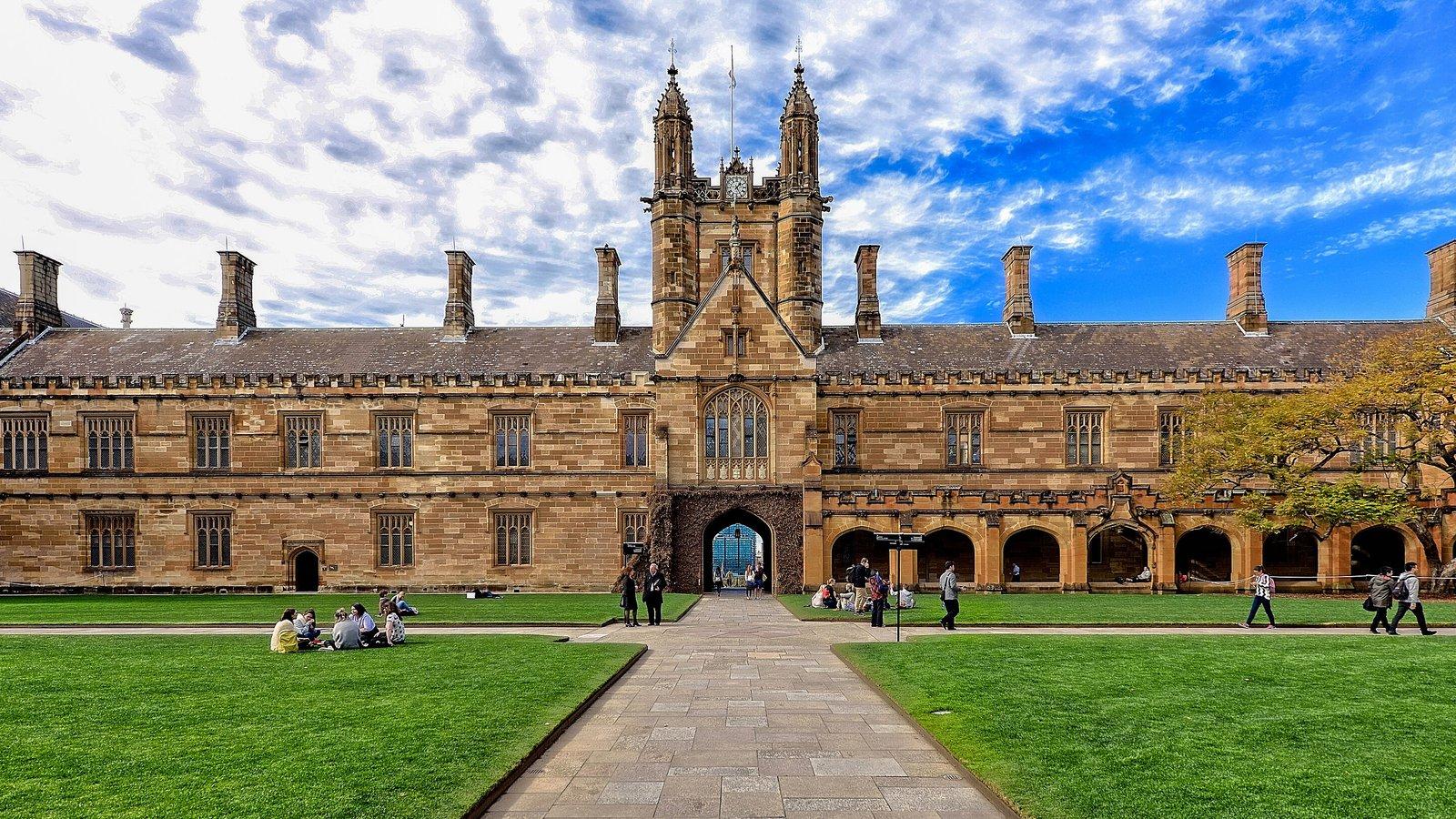
Image: Jason Tong / Wikimedia Commons / CC BY 2.0
Editor:管理员|Signed:2026-11-24 08:52
Professor Pulin Gong of the University of Sydney's School of Physics and his PhD student Andrew Ly have published a study in Nature Machine Intelligence on why AI systems trained under nearly identical conditions can learn different behaviours, the university said on November 6, 2026. They argue that some of this unpredictability is not caused by data order or hardware noise but by the mathematics of learning itself: even with those factors removed, extremely small differences in a model's starting parameters can lead to different outcomes.
The team trained about 500,000 neural networks for tasks including image recognition and text processing. They found that the regions of starting points leading to the same outcome, known as basins of attraction, form fractals called riddled basins, in which every point lies arbitrarily close to points that lead elsewhere. In one larger image-recognition network, making the starting settings 10 billion times more precise produced no measurable gain in reproducibility, and changing them by a single bit sent training to a different configuration in about 48% of cases. The paper is titled "Fractal basin geometry and the limits to predictability and reproducibility in deep learning".
According to The University of Sydney.
Corrections
If a fact is wrong, the correction and date go at the top. Principles
 Science: Peking University team cools atoms below 10 picokelvin aboard China's space station
 Tsinghua team uses LLMs and diffusion models to screen nearly 70,000 structures for low-lithium solid electrolytes
 Science: Zhejiang University team braces perovskite grain boundaries with nanodiamonds, reaching 27.04% certified efficiency
